The Michelin Guide in Italy: How to Read It and What Changes
The guide measures something other than what people expect, and grasping that difference changes how you use it to choose a table
The red guide is read as a ranking of a country's best restaurants. It is not that.
Michelin rates the plate rather than the establishment, and it does so within one particular frame of reference. Knowing what it actually measures changes how you use it entirely. Here it is in parts, with what happens on 12 November at the end.
What the Stars Mean
The guide's own formulations are more precise than any paraphrase.
Three stars means cooking worth a journey. Two stars means cooking worth a detour. One star is a reason to stop where you already happen to be.
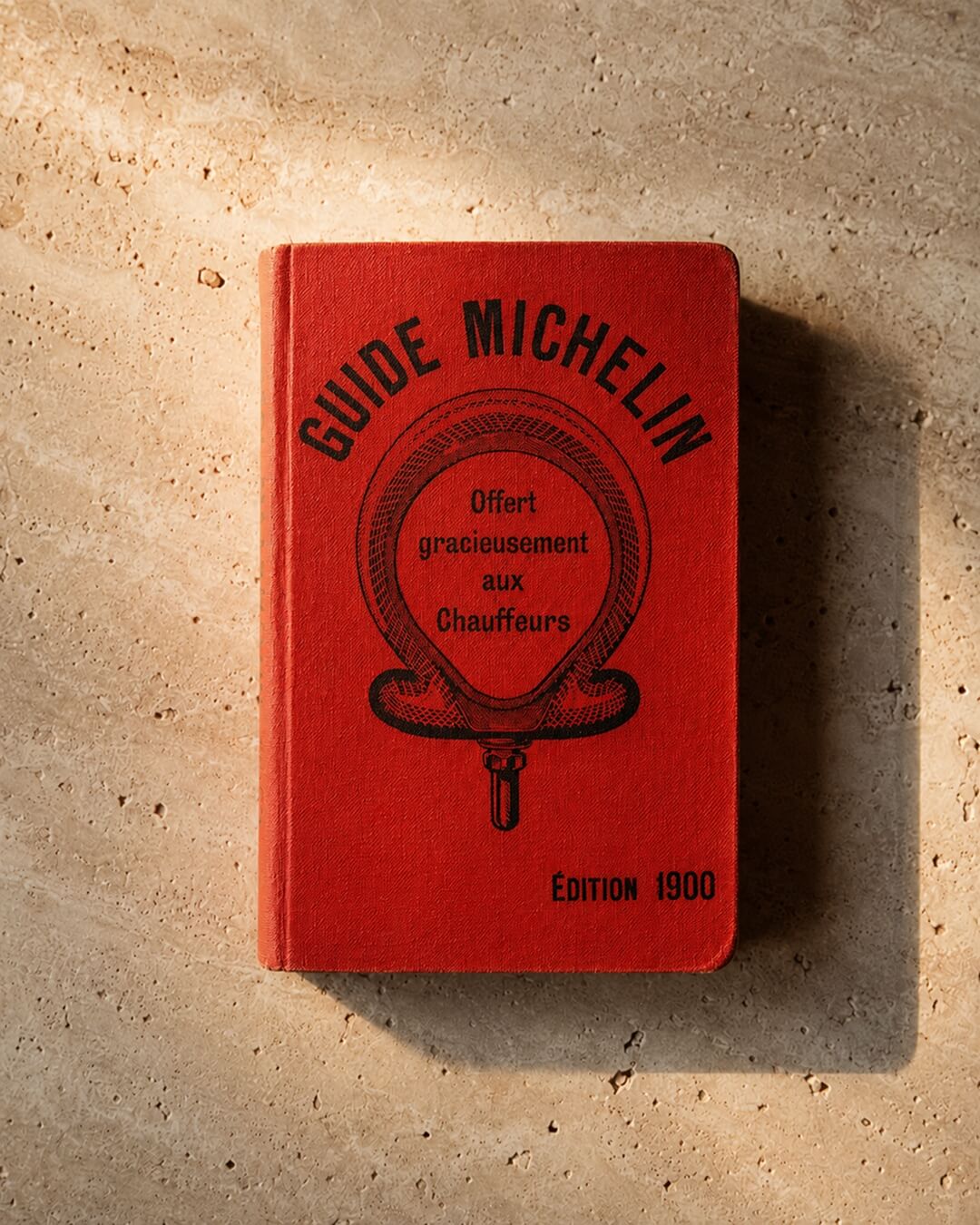
Notice the structure. It is a scale not of quality but of the distance it is reasonable to travel for a meal. The guide began in 1900 as an accessory to the tyre business of André and Édouard Michelin, and the logic of the road trip has been wired into it ever since.
Two rules follow, and they dispose of most disappointments. Only the plates are assessed: the room, the view, the service and the family history do not earn stars. And the criteria are identical in every country, so a Roman star and a Tokyo star mean the same thing.
What Else Is in There
Stars are a small part of the guide, and for a traveller not the important part.
The Bib Gourmand has existed since 1997 and marks very good cooking at an accessible price. For a trip it is the single most useful category in the book: no four-hour tasting menus, but places you can walk into on an evening without a plan.
The Green Star marks sustainable practice: working with local producers, respecting the season, cutting waste.
The Michelin Keys are a separate and recent rating system for hotels, with nothing to do with restaurants.
The scale of the 2026 selection looks like this: 394 starred restaurants, of which fifteen hold three stars, thirty-eight hold two and 341 hold one. Add 255 Bib Gourmand and seventy-two Green Stars. The guide as a whole lists 1,971 addresses.
Which is to say that starred restaurants are roughly one address in five, not the point of the exercise.
Italy's Starred Map Today
By province the 2026 edition falls out like this. Naples leads with twenty-seven restaurants, one of them three-starred, six two-starred and twenty with a single star. Rome is second with twenty-six: one three-star, three two-stars, twenty-two one-stars. Then Bolzano with twenty-one, Milan with twenty and Salerno with sixteen, all of them single stars, which is the Amalfi coast's doing rather than the town's.
Rome's three-star is La Pergola under Heinz Beck, who in the same edition took the guide's separate award as chef mentor.
The Bib Gourmand map is a different shape, which is telling: Piedmont and Emilia-Romagna lead with thirty-four addresses each, then Tuscany with twenty-six, Lombardy with twenty-three and the Veneto with eighteen.
Where Venice Sits in This
Venice does not appear in the top five provinces, and that is worth saying out loud rather than stepping around.
Explaining it by saying Venice feeds people badly would be silly. The cause is structural: a city carrying that volume of day traffic gives no economic encouragement to the model Michelin measures. A restaurant whose tables are always taken has little reason to invest in a kitchen that pays back over years of reputation.
From which comes a rule for Venice that inverts the general one. Michelin works less well here than in Piedmont, and what works best is the Bib Gourmand list plus knowing specific addresses. The 2026 edition did bring Venice a new star, Agli Amici Dopolavoro, but one star a year is an exception rather than a pattern.
Where the Starred Map Is Moving
One year's figures say little; their movement says a good deal.
In the 2026 edition the total number of starred restaurants rose from 393 to 394. Which is to say the system barely shifted in a year: roughly as many stars were lost as gained. The Italian summit is saturated, and there is no reason to expect each November to deliver a dozen new names.
The more interesting number lies underneath. Of the twenty-two new one-star restaurants, eight are led by chefs of thirty-five or under, two of them under thirty. Lombardy took the most new stars with four, Lazio second with three.
Read it this way: the summit is standing still while the generation beneath it turns over quickly. For choosing a table that means the new names are more interesting than the confirmed ones, and they are found in the year's list of newcomers rather than in the general roll.
What Happens on 12 November
The seventy-second Italian selection will be presented on Thursday 12 November 2026 at the Teatro Municipale in Piacenza. The ceremony begins around midday, goes out live on the guide's own channel, and the new selection appears on the website and in the app immediately afterwards.
Piacenza hosts for the second time after 2019, and this is the third consecutive year in Emilia-Romagna, following Modena and Parma.
The shape of the event is settled: the new Bib Gourmand names are released a few days ahead, then the ceremony itself brings the new stars, the Green Stars and the special awards.
How to Use Any of It
Four rules that turn the guide from an argument into a working tool.
A star is a booking problem, not a payment problem. The gap between a starred bill and an ordinary one is usually smaller than the gap between having a table and not having one. Starred places in Rome and Venice are booked weeks ahead and some of them months, and it should be done before the flights rather than after.
Take the Bib Gourmand first. If you have one evening and are not chasing names, that category returns more pleasure per hour spent.
A star does not mean the best local food. Michelin measures chef-driven cooking. The best carbonara in Rome and the best cicchetti in Venice sit outside the guide by definition, because they are not entered in that competition.
Catch the Bib Gourmand release, not the ceremony. The new Bib Gourmand names are published a few days before the ceremony itself, as a separate announcement. Almost nobody acts on them immediately, and the places are small, so those few days are the window in which a table can still be had without a fight. By the evening of the ceremony the new starred addresses will be booked out for weeks.
Currency beats the list. The selection is refreshed once a year; restaurants change more often. A November publication is a snapshot, not a warranty.
Rome and Venice are mapped by address rather than by star. Open City map of Rome or the City map of Venice.