Acqua Alta in Venice: What the MOSE Does and Does Not Do
The barrier rises from 101 centimetres, St Mark's floods from eighty, and everything practical lives in that gap
Two equally wrong ideas have settled around high water in Venice. The first is that the city is drowning and autumn is pointless. The second is that a barrier was built and the question is closed.
The truth sits in the gap between two numbers, and the whole practical value of this piece is in them.
Three Thresholds, Not One
Venetians grade their water, and the grading is more useful than any description.
A level of 90 to 109 centimetres above mean sea level is called a sustained tide. From 110 to 139 it is a very sustained tide. Above 140 centimetres it becomes exceptional high water, the kind that reaches the news.
Now the number that matters. St Mark's Square goes under at eighty centimetres. It is the lowest point in the city, and it floods at a level that does not officially count as a sustained tide at all.
Everything else follows from that. Water in St Mark's and a catastrophe in Venice are different events, and the first happens many times more often than the second.
What the MOSE Is
The acronym stands for experimental electromechanical module, and the word experimental has simply stayed on from the design stage.
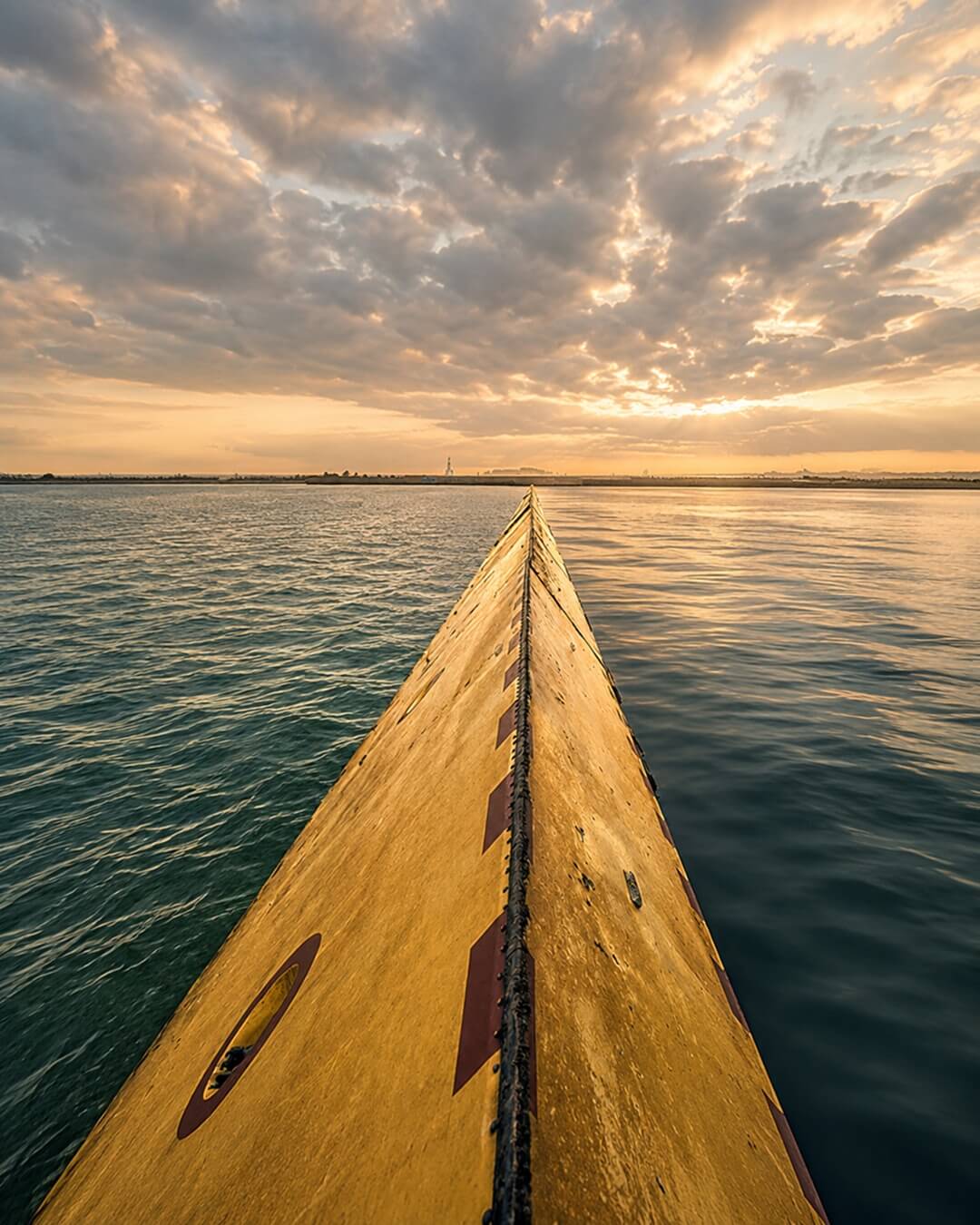
It works like this. The lagoon meets the sea through three inlets: the Lido, Malamocco, through which the shipping runs to Porto Marghera, and Chioggia. Seventy-eight mobile gates lie across them, metal caissons between eighteen and twenty-nine metres wide, fixed to concrete bases on the seabed. Ordinarily they rest on the bottom and are invisible. When a tide threatens they are raised with compressed air and the lagoon is sealed off from the sea. The system is designed for tides of up to three metres and has been in service since 2020.
Between 2020 and 2025 the barrier went up more than a hundred times.
The Trigger, and Why It Matters Most
Formally the MOSE is raised on a forecast of 110 centimetres. In practice it goes up at 101, because roughly ten centimetres are allowed for forecasting error.
Set that against the eighty centimetres at which St Mark's floods and you have the single most useful thing to know about Venice in autumn: there is a whole band of levels at which the square stands in water and the barrier does not move, and that is the system working as designed rather than failing.
There is a second line almost nobody mentions. In parts of the city ninety-five centimetres is enough to stop boats, ambulances and fire crews using some of the internal canals. Long before the trigger is reached, the city is already operating differently.
Why the Water Comes at All
The tide in the lagoon is not one phenomenon but a sum of several, which is worth knowing because each governs a different part of the forecast.
There is the astronomical tide, predictable years ahead. There is wind: the scirocco drives water up the Adriatic and straight into the mouth of the lagoon, and can add tens of centimetres to the astronomical peak. There is atmospheric pressure. And there are two slow processes shifting the baseline: eustasy, the general rise in sea level, and subsidence, the settling of the ground beneath the city.
From which follows the thing every Venetian knows and most visitors do not. A bad day is made not by a high astronomical tide on its own but by its coincidence with wind. That is why the forecast is revised, and why yesterday's figure may not be today's.
The Season That Broke the Records
The winter of 2026 tested the system properly.
In a single high-water season the barrier was raised thirty-nine times, against twenty-three the season before. More than twenty of those came after 28 January alone, and on six days in early February the gates went up twice in twenty-four hours, morning and evening. The first fifty days of the year brought twenty-four raisings, roughly one every other day. The head of the city's tide centre called the picture unprecedented.
Each raising costs between two and three hundred thousand euros. By the middle of February the season's bill ran to several million. Meanwhile, according to the head of the lagoon authority, the system is short of at least fifty million euros a year for maintenance.
That same season brought the first serious use of partial raisings: lifting some of the gates rather than all of them, without sealing the lagoon completely. It is cheaper and gentler on the lagoon, and it looks like the system's future.
What the MOSE Does Not Settle
The barrier protects the city from flooding. It does not remove the water from St Mark's, and it has not settled the arguments about itself.
Environmental groups point out that both the raisings and the concrete on the seabed alter the lagoon's hydrodynamics and damage its flora and fauna. The economics are a separate question: a Ca' Foscari study published in Regional Environmental Change questioned how sustainable the model is as sea levels continue to rise, showing that at a 110-centimetre trigger the number of days the lagoon would spend closed could pass any reasonable limit.
Put plainly, the MOSE is a working solution with a known shelf life, and in Venice people say so openly.
How to Plan the Day
The practice is simple and comes down to four points.
Read the forecast the evening before. Tide forecasts are issued by the city's tide centre, published in advance and given with the hour of the peak. The water arrives and leaves on a timetable; it does not sit there all day.
Measure against eighty centimetres rather than against the MOSE trigger. If the peak is higher, there will be water in St Mark's. If it is lower, you will not notice it.
The peak is short. Even on a serious day the square stands in water for an hour or two around the maximum, not for a day. Move St Mark's to the other half of your day and the problem disappears.
And bear in mind that the walkways are not always where you expect them. In the winter of 2026 the laying of them at key points was suspended for three weeks so as not to obstruct the Carnival crowds. On days like that rubber boots are sold on every corner and solve the whole thing.
One last thing to keep in mind: at ninety-five centimetres parts of the internal canal network stop being passable for boats, which changes vaporetto and water-taxi routes. On days like that allow an extra twenty minutes for any crossing and do not cut a train connection fine.
Venice in autumn is worth the trouble of learning the tide. The November light beats the summer light, the city returns to itself, and with a little planning the water stays what it actually is: a timetable rather than a disaster.
The whole city, on the map ItaGuide. Open City map of Venice.