How to Get Into the Venice Film Festival Without Accreditation
The public has its own way in, and the largest hall on the Lido belongs to them rather than to the accredited
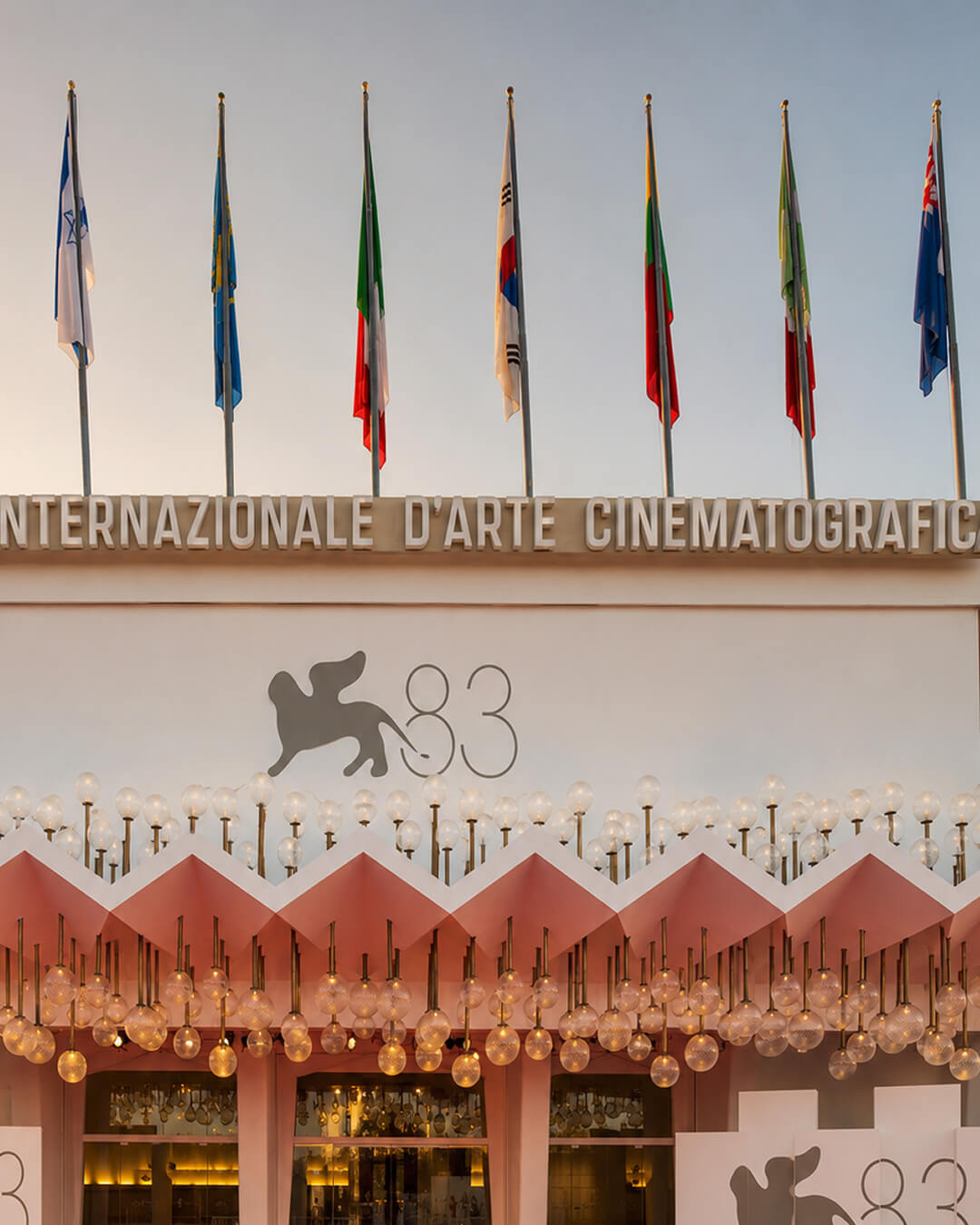
From the outside the Mostra looks shut. Accreditation, lists, security at the carpet, three thousand journalists. The reasonable conclusion is that you have to be in the film industry to see anything.
It has been the wrong conclusion since 1932. The public has its own route through the festival, marked separately in the daily programme, and the largest hall on the Lido is the one the public gets.
What Is Closed and What Is Not
The screenings are ticketed. The ground around the Palazzo del Cinema carries on regardless, and you need no accreditation to be on it.
Some screenings really are reserved for the accredited, and the daily programme says so plainly. The rest go on public sale. The division runs by screening rather than by venue, so read the schedule, not the list of halls.
The red carpet before an evening premiere is watched from behind the barrier. People take their place a couple of hours early. It is the only queue at the Mostra where nobody buys a ticket.
PalaBiennale Rather Than the Sala Grande
This is where the useful part of the article sits.
The Sala Grande in the Palazzo del Cinema seats 1,032. It has the carpet, the gala premieres and the cast in the front row, and its tickets vanish in minutes.
A few minutes away on foot, on Via Sandro Gallo, stands the PalaBiennale. It is a temporary structure, taken down after the festival, and it seats 1,760, more than any other hall of the Mostra. It also runs the evening double bill for the public, by now a fixture of the festival week.
The logic is straightforward. If you are coming to see the film, go to the PalaBiennale: same titles, twice the seats, a fraction of the anxiety. If you are coming to watch the people who made it walk up a carpet, then it has to be the Sala Grande, and you will have to fight for the seat.
There is a third option almost nobody writes about: the Sala Corinto in the Parco Quattro Fontane, 340 seats, in use since 2022. A small room that rewards reading the schedule more carefully than everyone else.
When to Buy
Sales arrangements are announced once the programme has been presented, around the middle of August. Tickets are sold online only, through the Biennale site. There is no box office on the Lido for this.
Which means: read the daily schedule the day it appears, and be ready to buy within the first few hours. The loud Sala Grande premieres go first.
There is another route. Cinema accreditation costs €95 and covers all eleven days; applications close on 12 August. If you are coming to the Lido for a week rather than an evening, it works out cheaper than assembling a programme ticket by ticket.
What It Costs
The 2026 prices appear with the programme. Last year as a guide: screenings at the PalaBiennale and in the Orizzonti section from €9, an afternoon showing in the Sala Grande around €18, an evening competition premiere with the cast between €35 and €50. Reductions apply for under-26s, over-65s and Biennale Card holders.
A day at the Mostra with two films costs less than dinner near San Marco.
The Lido, and Getting Back
The Mostra takes place on the Lido; the landing stage is Lido S.M.E. Vaporetto lines 1, 5.1, 5.2, 6 and 14 all serve it. From the stage to the Palazzo del Cinema is about twenty minutes on foot along the Gran Viale, or a few minutes by bus.
The thing worth knowing in advance: the night line N runs from the Lido until dawn, through the Giudecca Canal and the Grand Canal to San Marco and Piazzale Roma, roughly every half hour, with the last sailings near four in the morning. The evening screening at the PalaBiennale finishes late, and this is what makes that a non-problem.
If you are crossing to the Lido more than twice, a multi-day ACTV pass pays for itself on the second trip.
Every address and landing stage mentioned here is marked on the open map of Venice.
If There Is No Ticket
Morning and afternoon screenings sell far more slowly than evening ones. Venezia Classici, which shows restored prints, is almost always available. Venice Immersive runs to its own schedule. Giornate degli Autori and the International Film Critics' Week are autonomous sections with their own access rules, and they are the last thing anyone thinks of.
Separately: the Art Biennale is running in the city at the same time and closes on 22 November. A trip to the Mostra with no cinema ticket at all is still a trip to Venice in its best month.
If you want someone to build the schedule, secure the tickets and run the day on the Lido end to end, that is a private ItaProfile service.
The Mostra is not a closed club. It is simply arranged more intricately than it looks, which is why most people end up in the one hall with the fewest seats.