Pontormo in Rome: The Autumn Exhibition Worth the Trip
A monographic show of the painter who abandoned the rules of the Renaissance while the men who made them were still alive
Mannerism is usually explained as the thing that came after the Renaissance. That is imprecise, and it strips the story of all its drama.
Mannerism is the moment when the rules of the Renaissance stopped being believed by the very people who had learned them from the men who invented them. Pontormo was born in 1494, arrived in Florence at thirteen, trained in the workshops of Piero di Cosimo, Fra Bartolomeo and Mariotto Albertinelli, overlapped with Leonardo, and from 1512 was a pupil of Andrea del Sarto. Around 1515 he probably spent time in Rome. Raphael and Michelangelo both took notice of him, both of them alive and working.
And after that he walked away from the classical canon, in a direction from which there was no coming back.
What He Did to a Painting
The quickest way in is through what his pictures do not have.
They have no centre. A Renaissance composition is built around a principal thing; in Pontormo the scene holds together on a crossfire of glances and gestures, and the eye never finds the place where it is supposed to settle. Proportions are drawn out. The perspective is bold to the point of implausibility.
The most interesting part, though, is the colour. Painters usually build volume with shadow, which means mixing in grey and black. Pontormo builds it by changing the colour itself: pink turns towards lilac, green towards yellow, a fabric shifts key while staying lit. Hence that artificial, almost luminescent light by which his pictures are recognised instantly, and which the twentieth century took to far more warmly than the nineteenth did.
It is worth remembering where this came from. Some of Pontormo's decisions arrived not from Italy but from the engravings of Dürer, which is to say from the north and from a different pictorial logic. Florentine Mannerism grew partly out of German printmaking, and nothing explains its nervousness better.
What to Go For
The show is monographic, drawing works from major museums and collections including foreign ones. But one thing stands apart.
The Visitation from Carmignano, painted around 1528, is coming to Rome. It is a picture that lives not in a museum but in a parish church, and it is released for travel only very rarely: the move to Rome was authorised separately by the Diocese of Pistoia.
The Visitation is four female figures in implausibly bright robes, standing almost against one another, with a conversation between them that is not depicted so much as transmitted. If you are going to look at Pontormo at all, this is the thing to look at, and the next chance to see it outside its church may not come for decades.
How to Look at It
One practical recommendation that changes the whole experience.
Do not begin with the subject. With Pontormo it is almost always clear what is depicted and almost never the point. Stand where you can see the whole picture and spend the first half-minute looking only at where the figures are looking. As a rule none of them is looking where you are, and the composition starts to turn.
Make the second pass on colour: find one piece of fabric and follow how it changes key while staying lit. That is where the thing separating Pontormo from any contemporary of his is hiding.
Read the subject only on the third pass. In that order Mannerism becomes clear in one room rather than across three books.
The Florence It Was Painted In
The dates here are not background. They are the explanation.
1527 is the Sack of Rome. Florence in those same years swings between the republic and the return of the Medici; the city is besieged, the old order is ending and the new one has not arrived. Pontormo, Rosso Fiorentino and Cellini all work in exactly that interval.
Everything else follows: unstable compositions, faces without composure, colour that refuses to behave naturally. Art that has lost its confidence looks like this. By that point the Renaissance had become a canon, and a canon is the thing you can break deliberately.
Practicalities
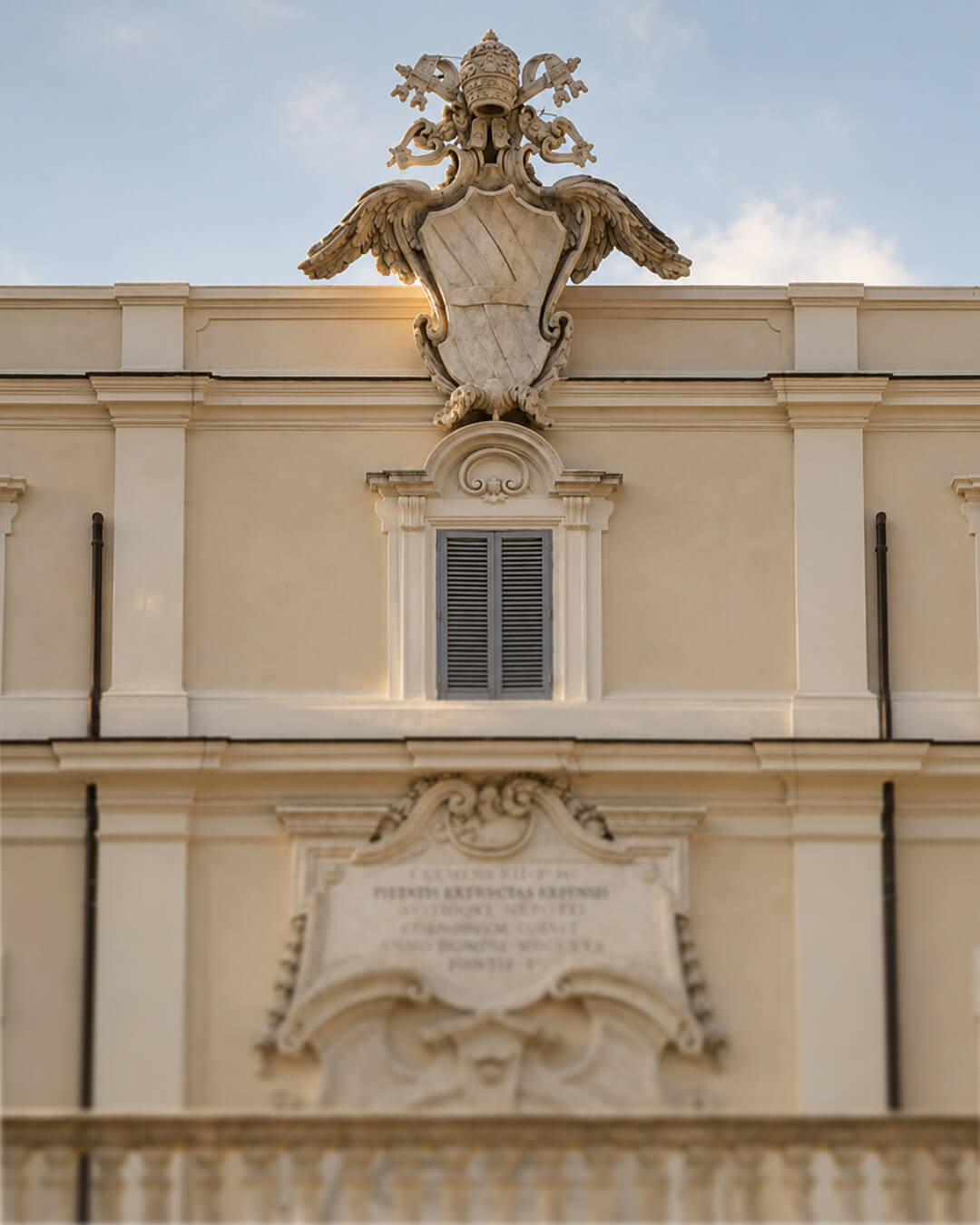
The exhibition runs from 8 October 2026 to 7 February 2027 at the Scuderie del Quirinale, Via XXIV Maggio 16. Metro: line A to Barberini or Repubblica, line B to Cavour. Buses 40, 60, 64, 70, 170 and H, stop Nazionale or Quirinale.
Tickets were not yet on sale as this piece went out; the Scuderie's official box office is VivaTicket. We keep the on-sale date in Pulse.
One thing people usually discover at the door: on Saturdays, Sundays and public holidays the Scuderie do not guarantee entry without a prior booking. For a major show on a December weekend that means you will simply not buy a ticket on the spot.
The best window for an exhibition of this kind is always the same: the first fortnight after opening, and the second half of January. Roman half-term will take the October weekends and Christmas will take December.
And a pairing almost nobody considers. Ten minutes' walk from the Scuderie, under the Trevi quarter, lies the Vicus Caprarius, an underground archaeological site nine metres below the street. An hour before the exhibition or after it, a mile and a half of walking in total, and the day comes together instead of falling apart.
What Else Is On in Rome This Autumn
Pontormo does not arrive into an empty season, and if you are coming for exhibitions it pays to count them together.
Rembrandt runs at the Museo Storico della Fanteria from 26 October 2026 to 21 February 2027. From 9 October to 18 January the Villa Medici shows Soleil noir, a project on oil and contemporary art, in a building you do not otherwise get into.
The three of them add up to an autumn Rome that has nothing to do with the Colosseum, and they fit into two unhurried days. The dates overlap completely between late October and the middle of January.
The whole city, on the map ItaGuide. Open City map of Rome.